
Repurposing Legacy Infrastructure for Australia’s Clean Energy Transition
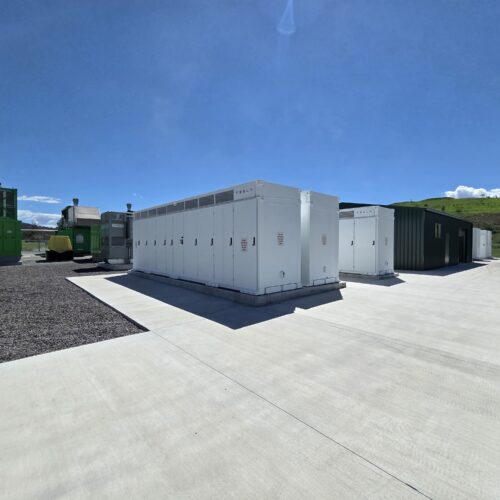
Capturing value from disused land is a critical step in building a cleaner, more resilient energy grid. At Sydney’s Northern Beaches, LGI has partnered with the NSW Government’s Waste Asset Management Corporation (WAMC) to convert the closed Belrose landfill site into a state-of-the-art $20 million, 12 megawatt / 24 megawatt-hour Battery Energy Storage System (BESS).
Power generation from declining landfill gas ceased in 2022, but the site’s established grid connection offered an ideal foundation for grid-scale battery storage. As LGI’s first standalone BESS asset, Belrose marks a major strategic shift—deploying market-proven control systems into a high-growth asset class to deliver utility-grade reliability directly to the local distribution grid.
Smart NEM Integration via DACS
Managed by LGI’s proprietary control platform—our Dynamic Asset Control System (DACS)—the Belrose BESS will automatically monitor National Electricity Market (NEM) signals. It will import and store energy when renewable supply is abundant during low-demand periods, then dispatch it back into the local network during critical evening peak demand hours.
Engineering a Total Site Energy Solution
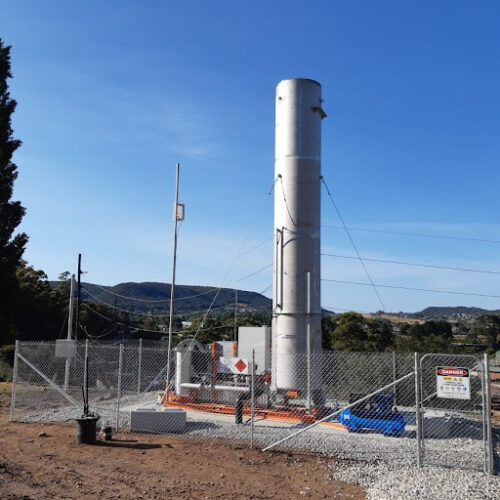
As a direct outcome of the trust established through this tender, LGI is also managing and upgrading the site’s legacy landfill gas flaring system. By safely combusting remnant methane, LGI provides a total site energy solution that abates greenhouse gases and improves local air quality alongside commercial energy storage.
LGI’s Dynamic Asset Management System (DACS) integrates the battery with the power station, the landfill, the local power grid and the National Energy Market (NEM). After two years in development, this pioneering battery technology sets up significant benefits for Council, the region and its residents. Where previously the generator could respond in minutes, with batteries the project can store and dispatch renewable energy generated with biogas from this landfill within seconds.
Project Snapshot
Long-term contract with Partner: Waste Asset Management Corporation (WAMC), NSW Government.
Asset Type: 12MW / 24MWh Standalone Battery Energy Storage System (BESS).
Control Platform: Proprietary Dynamic Asset Control System (DACS).
Investment: $20 Million private-sector-funded clean energy asset.
Grid Impact: Delivers distributed community battery benefits capable of powering up to 1,500 homes during peak demand annually. 10-20x larger than standard community batteries.
Integrated Environmental Benefit: Operation and upgrade of legacy landfill gas flaring system for ongoing carbon abatement and local air quality improvement.
Timeline: Onsite construction commenced July 2026; full commissioning in early 2027.

Battery storage capacity

Peak Power Supply

Biogas captured
Carbon abatement

Seedlings planted
Enabled by LGI’s Proprietary DACS
Managed by LGI’s proprietary Dynamic Asset Control System (DACS), the Belrose BESS seamlessly coordinates energy storage and dispatch to support local power grid stability.
By deploying DACS at Belrose, LGI will apply a market-proven control platform to our first standalone grid-scale BESS, to deliver reliable power when the grid needs it most.
“While Belrose will be our first standalone BESS, the software, control platform, and commercial logic behind it are already proven across our portfolio. We are taking a technology and operational system we know intimately and deploying it into a high-growth market to deliver clean, reliable, and affordable power.”
– Jarryd Doran (LGI CEO)
“I am delighted LGI is going to create a facility that will be a critical community asset. The new system will create jobs and advance our net zero goals, while supplying power to thousands of homes across Sydney.”
– Peter Graham, Chief Executive, Waste Asset Management Corporation (WAMC)
People engineering, a clean energy, zero carbon future
Partnerships with public asset owners like WAMC demonstrate how legacy infrastructure can be revitalised to lead Australia’s renewable transition. Converting disused landfill sites into modern energy hubs provides local grid resilience without burdening ratepayers.
At 12 megawatts, this facility operates at true utility scale—far exceeding smaller neighbourhood battery projects (by 10-20 times) to deliver tangible grid-firming benefits where electricity demand is highest.
-
Creates an income stream
-
Supplies flexible, dispatchable power
-
Improves reliability with grid stabilisation services
-
Shifts power to times when it is most needed
-
Converts methane to less harmful CO2
-
Repurposes an old closed landfill
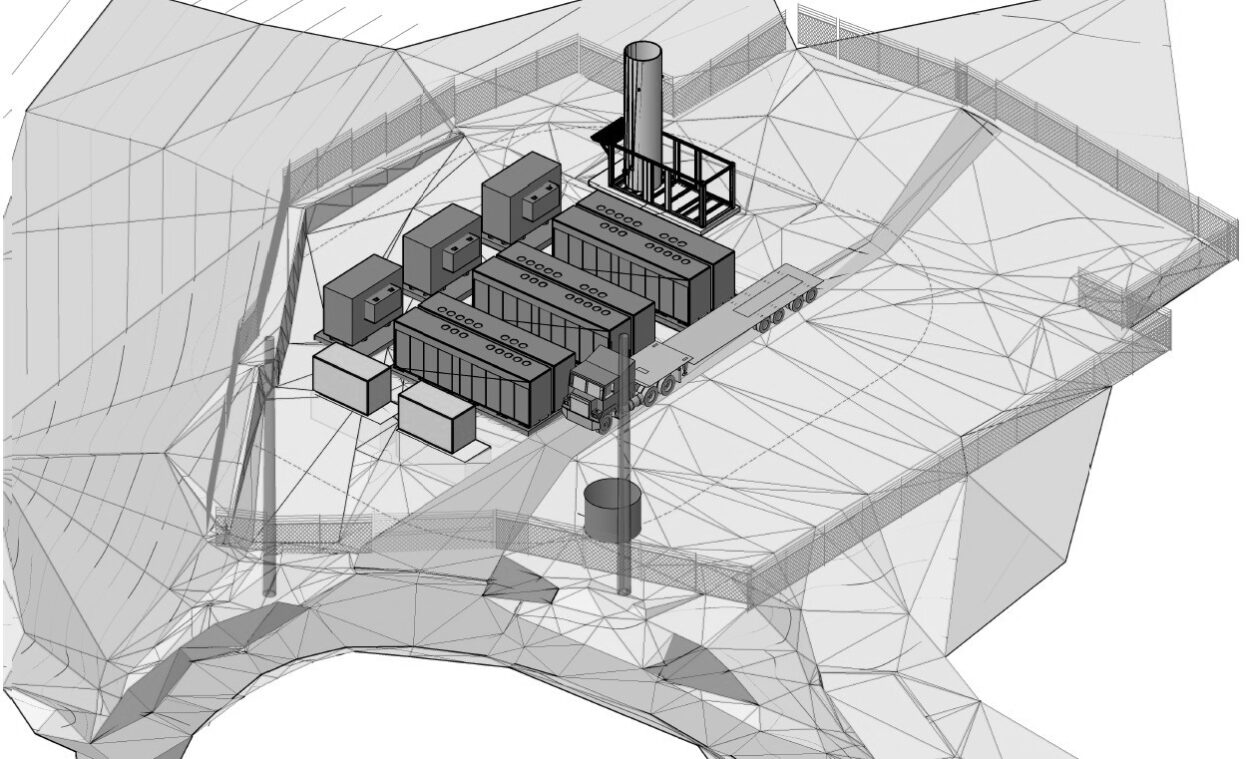
Artist Impression of the BESS Privately funded standalone asset.
This project is another prime example of how sustainable energy innovation continues to transform disused land into productive infrastructure. At LGI, we are focused on maximising the layers of environmental and grid benefit across Australia, one landfill site at a time.